8k影院 8k影院

确认

购买本片需要支付0金币,确定要购买吗?

取消

确定

影视简介
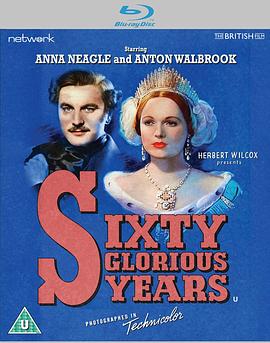
Sixty Glorious Years is an exercise in the creation of iconography, both for Victoria and its star, Anna Neagle (who subsequently became known as 'Regal Neagle'). Just as Elizabeth I commissioned artists to create flattering iconic images for public consumption, so this film performs a similar function, for Neagle is more beautiful than the real life Victoria. Controversial events (such as the 'Irish problem') are omitted and unpleasant aspects of Victoria's character (her petulance, arrogance, favouritism and 'right to privilege') are glossed over as endearing little 'whims'. Albert acts as a moderating influence when she goes too far.  The film followed a year after the highly successful Victoria the Great (d. Herbert Wilcox, 1937). Again the screenplay is by Miles Malleson and Robert Vansittart, and many of the supporting cast (the cream of acting talent of period) repeat their roles, this time for the colour cameras. This was the first full length Technicolor film of cinematographer Freddie Young, who captures the spectacle of royal weddings, grand balls and opulent interiors, with scenes actually filmed at royal palaces. Vivid battle scenes, set in Alexander Korda's empire territory (Sevastopol and the Sudan), rival those in The Four Feathers (d. Zoltan Korda 1939).  The title music sets the tone a regal choir sings over a shot of the crown. Elgar's 1901 'Pomp and Circumstance' march is heard during the diamond jubilee celebrations and, as Victoria's coffin lies in state, the film concludes with Anthony Collins' stately music accompanied by the text of Rudyard Kipling's 'Lest we forget'. Combined with the emotional appeal of scenes of Victoria connecting with her 'ordinary folk', this is stirring stuff.  The film connects with contemporary events of 1938. The release of two celebratory royal films was intended to boost public affection for the monarchy in the wake of Edward VIII's abdication. Anglo-German relations were another touchy subject. With another war on the horizon, influential voices wanted appeasement, and the film could be seen to fit that agenda. Victoria herself was of mainly German descent, nicknamed 'the grandmother of Europe', while Albert is a 'good German', charmingly played by Anton Walbrook as a cultured, decent man.  Sixty Glorious Years now seems unduly formal and reverential. Had movies existed during Victoria's reign (they only emerged at the end) this might have been the kind of film produced. Unlike Mrs Brown (d. John Madden, 1997), it is all so very 'Victorian'.  Roger Philip Mellor
演员

荣耀六十年

资源列表
  • HD中字
相关影视
更多
Let's Play充满挑战的人生
22 岁的软件开发者萨姆·杨自幼便是狂热的游戏爱好者。学生时代全身心投入游戏开发,终于推出了酝酿已久的冒险解谜游戏《Luminate》!然而,当超人气游戏主播马歇尔·劳给出恶评后,她作为游戏开发者的前途骤然黯淡。更意外的是——马歇尔竟搬到了她隔壁!   随着与马歇尔的相遇,萨姆与公司上司查尔斯·琼斯、发小兼常去咖啡馆的员工林肯·哈德森等人的关系也逐渐发生变化。在父母过度保护下长大、恋爱经验为零的萨姆,面对与男性突如其来的亲密接触不知所措,却也开始慢慢打破心防。   这场以人生为赌注的终极挑战——萨姆能否成功通关!?
挑战吧大神
《挑战吧大神》东风卫视全新棋牌类益智型节目,由徐乃麟、熊熊主持,征求素人上节目方城之战拿奖金
小姐不熙娣
自带女王气势的 IPSS 的女王小S,睽违六年强势回归!以女性出发点的节目议题,聚焦女性的职场与生活感受。
11点热吵店
TVBS欢乐台42频道推出全新节目《11点热吵店》,荒谬大师沈玉琳遇上疯疯贵妇Melody竟是“地表最震撼”组合!谈论时下最“热吵”的话题,包含热门时事、职场人际、两性话题,也将邀请当红来宾,跟节目班底来场“热吵对决”。每周一到周四晚間11  點播出!
群英会2018
《群英会》是一档纯原创的语言类节目,以讲述、普及中国传统文化知识为节目的主要方向。节目每期两位主持人与生活在中国的六名各国青年围绕一个有关于中国传统文化的话题进行讨论,从不同的角度展现中国文化在年轻人心中的位置。节目以讲述、采访、争论、学习、展示等艺术形式为载体,弘扬中国文化,让观众在娱乐嬉笑之余感受中华传统文化的博大精深。
笑动剧场
《笑动剧场》是北京电视台文艺节目中心唯一一档日播的“语言类”栏目。“强力推出”第一时段,独创“幽默评书”打造北京风格,“坚守稳固”第二时段,坚持有“亲和力”的专业化道路,“独具匠心”年轻时段,开辟“推新人 展新作”的平台,深入基层前沿挖掘新人新作。
新老娘舅
《新老娘舅》栏目是一档全国首创的调解类谈话节目,由新娱乐和上海市司法局联合制作。节目以调解百姓纠纷、营造和谐社会为宗旨,用老百姓喜闻乐见的形式,潜移默化地宣传国家的政策法规,受到了观众的广泛欢迎。开播以来,收视率屡创新高,节目组设置的四门热线电话,每天要接受300多位观众的咨询,为百姓排忧解难。   《新老娘舅》栏目培养了一大批在社会上享有知名度,老百姓认可的“老娘舅”,如柏万青、黄飞珏、裴蓁、冯红梅、张兆国、黄红梅、万峰、蔚兰等等,在节目现场调解百姓纠纷,和主持人一起为百姓提供化解矛盾的方案。
人气美食
开办于2007年的《人气美食》为美食榜单、人气小店、民间美食、烹饪厨艺和饮食风俗为主要内容的美食文化节目。《人气美食》为星尚传媒著名的三大资讯节目之一,现在已成为上海美食最权威的指南。   《人气美食》正在向多媒体和渠道、终端方面进行全方位的产业拓展,特别是人气美食网是上海知名的美食网。
热门文章
更多
人气967 剧情片
0.0 2023 英国 HD
剧情片

年份: 2023

主演: Anna   Anton   Aubrey   C.   Neagle   Rilla   Smith   Walbrook   Walter  

描述:Sixty Glorious Years is an exercise in the creation of iconography, both for Victoria and its star, Anna Neagle (who subsequently became known as 'Regal Neagle'). Just as Elizabeth I commissioned artists to create flattering iconic images for public consumption, so this film performs a similar function, for Neagle is more beautiful than the real life Victoria. Controversial events (such as the 'Irish problem') are omitted and unpleasant aspects of Victoria's character (her petulance, arrogance, favouritism and 'right to privilege') are glossed over as endearing little 'whims'. Albert acts as a moderating influence when she goes too far.  The film followed a year after the highly successful Victoria the Great (d. Herbert Wilcox, 1937). Again the screenplay is by Miles Malleson and Robert Vansittart, and many of the supporting cast (the cream of acting talent of period) repeat their roles, this time for the colour cameras. This was the first full length Technicolor film of cinematographer Freddie Young, who captures the spectacle of royal weddings, grand balls and opulent interiors, with scenes actually filmed at royal palaces. Vivid battle scenes, set in Alexander Korda's empire territory (Sevastopol and the Sudan), rival those in The Four Feathers (d. Zoltan Korda 1939).  The title music sets the tone a regal choir sings over a shot of the crown. Elgar's 1901 'Pomp and Circumstance' march is heard during the diamond jubilee celebrations and, as Victoria's coffin lies in state, the film concludes with Anthony Collins' stately music accompanied by the text of Rudyard Kipling's 'Lest we forget'. Combined with the emotional appeal of scenes of Victoria connecting with her 'ordinary folk', this is stirring stuff.  The film connects with contemporary events of 1938. The release of two celebratory royal films was intended to boost public affection for the monarchy in the wake of Edward VIII's abdication. Anglo-German relations were another touchy subject. With another war on the horizon, influential voices wanted appeasement, and the film could be seen to fit that agenda. Victoria herself was of mainly German descent, nicknamed 'the grandmother of Europe', while Albert is a 'good German', charmingly played by Anton Walbrook as a cultured, decent man.  Sixty Glorious Years now seems unduly formal and reverential. Had movies existed during Victoria's reign (they only emerged at the end) this might have been the kind of film produced. Unlike Mrs Brown (d. John Madden, 1997), it is all so very 'Victorian'.  Roger Philip Mellor
展开

资源列表

  • HD中字
本地记录
*
*